
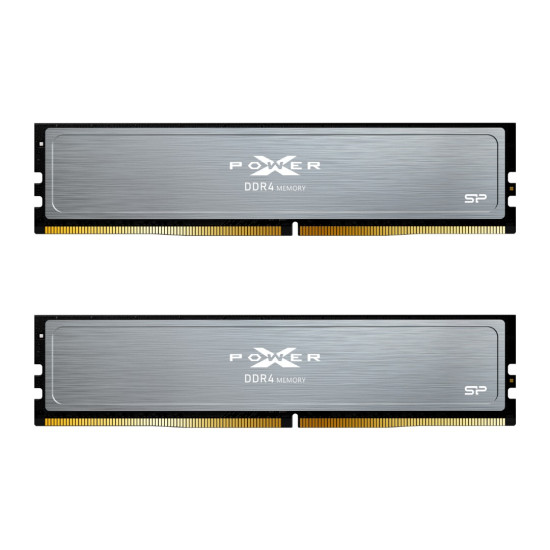


- Price: 9,000৳
- Stock: In Stock
- Brand: Silicon Power
- Model: XPOWER Pulse
Payment Options
Available Options
Key Features
- DDR4 3200MT/s Performance
- 8/16GB Capacity
- CL16 | 1.35V
- Intel XMP 2.0 & AMD Compatible
- Compact & Cost-Effective
- Limited Lifetime Warranty
| Basic Information | |
| Form Factor | UDIMM |
| Main Features | |
| Capacity | 8GB/16GB |
| Density | 1G*8 |
| Frequency | 3200MT/s |
| Latency | CL16-18-18-38 |
| Technical Specification | |
| Model | XPOWER Pulse |
| Power | |
| Voltage | 1.35V |
| Physical Specification | |
| Dimensions | 133.4x31.3x5.0 mm |
| Warranty Information | |
| Warranty | Lifetime Warranty |
Silicon Power XPOWER Pulse DDR4 8GB: Worth It?
The Silicon Power XPOWER Pulse DDR4 8GB is a budget desktop memory module (UDIMM) rated at 3200MT/s with CL16-18-18-38 timings and 1.35V operating voltage. It supports Intel XMP 2.0 and is listed as EXPO-compatible with AMD motherboards, and Silicon Power backs it with a Limited Lifetime Warranty. It suits budget PC builders and gamers who want a straightforward memory upgrade without RGB lighting or premium pricing, though 8GB alone is a light capacity by current standards for most modern gaming or multitasking workloads. The Silicon Power XPOWER Pulse DDR4 8GB is a budget desktop memory module rated at 3200MT/s, aimed at buyers who want a straightforward, no-frills RAM upgrade rather than a premium RGB kit. This guide covers the core specs, explains what the key numbers mean in practice, and lays out who this module fits and who it doesn't so you can decide whether it belongs on your shortlist.
What Is the Silicon Power XPOWER Pulse DDR4 8GB?
The Silicon Power XPOWER Pulse DDR4 8GB is a single 288-pin UDIMM (unbuffered DIMM) desktop memory module rated at up to 3200MT/s with CL16-18-18-38 timings and 1.35V operating voltage. It's part of Silicon Power's XPOWER "Pulse" line, positioned as the company's entry-level gaming memory series — distinct from the RGB-equipped XPOWER Turbine RGB series and the higher-speed XPOWER Turbine series (which scales up to 3600MT/s).
Per Silicon Power's official product page, the Pulse DDR4 Gaming UDIMM line is available in both 8GB and 16GB single-module capacities, and is explicitly marketed on price: "budget-friendly 3200 MT/s speed, ultra-low CL16 latency" is how the company itself frames its core value proposition.
Who Should Buy the XPOWER Pulse DDR4 8GB?
This module fits well for:
- Budget PC builders who want reliable, XMP-compatible DDR4 memory without paying for RGB lighting or premium branding.
- Buyers upgrading an older single-channel system or adding a single module to a system with an open slot.
- Light productivity and general computing users — web browsing, office applications, media consumption — where 8GB is generally sufficient.
- Secondary or budget-build systems, such as a basic home office PC or a lightweight secondary machine.
- AMD and Intel platform users alike, since it supports Intel XMP 2.0 and is listed as EXPO-compatible with AMD motherboard
Who Should Avoid It?
It's a weaker fit for:
- Modern gamers — most current AAA games recommend 16GB as a baseline, making a single 8GB module a bottleneck for many current titles.
- Buyers wanting dual-channel performance — a single 8GB stick runs in single-channel mode, which is measurably slower for memory-bandwidth-sensitive tasks than a matched dual-channel kit (e.g., 2x8GB).
- Content creators and multitaskers — video editing, 3D rendering, and heavy multitasking workloads typically benefit from 16GB, 32GB, or more.
- Buyers who want RGB lighting — the Pulse series uses a plain grey heat spreader; Silicon Power's XPOWER Turbine RGB series is the RGB-equipped alternative.
- Buyers who need a guaranteed, specific warranty length for their region — since the manufacturer's global "Limited Lifetime" policy and at least one regional retailer's stated terms don't match, confirming your region's actual honored warranty is worth doing before purchase.
Design and Build
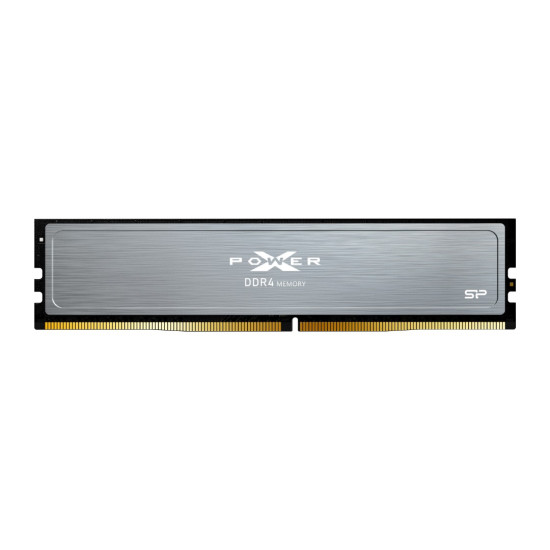
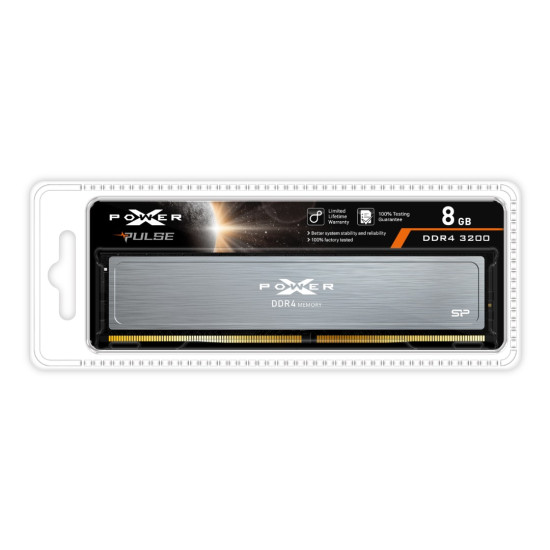
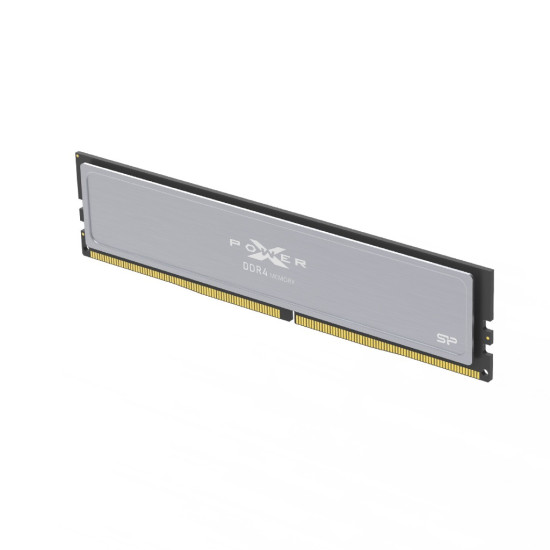
The XPOWER Pulse DDR4 8GB uses a plain grey heat spreader without RGB lighting, distinguishing it visually from Silicon Power's RGB-branded memory lines. At 133.4 x 31.3 x 5.0mm and roughly 25 grams, its dimensions are standard for a desktop UDIMM and should fit comfortably under most CPU air coolers and low-profile cases, though buyers with unusually tight cooler clearance should always double-check compatibility regardless of module brand.
Performance: Speed, CAS Latency, and What They Mean
Direct answer: The XPOWER Pulse DDR4 8GB is rated at up to 3200MT/s with CL16-18-18-38 timings, a combination that Silicon Power itself frames as prioritizing "ultra-low latency" and "unrivaled responsiveness" at a budget price point, striking a reasonable balance between speed and CAS latency for general desktop use.
Memory speed (measured in MT/s, or megatransfers per second) describes how much data the module can theoretically move per second, while CAS latency (CL) describes the delay, in clock cycles, before the memory responds to a command. A lower CL number at a given speed generally means lower latency and marginally snappier response, though the practical, real-world difference for typical desktop use is often smaller than raw numbers might suggest — CL16 at 3200MT/s is a solid, if unremarkable, combination in the current DDR4 market, comparable to many other budget and mid-range DDR4 modules at the same speed.
Single Channel vs. Dual Channel: Why It Matters
Because this is sold as a single 8GB module, running it alone means your system operates in single-channel memory mode, which generally delivers meaningfully lower memory bandwidth than a matched dual-channel pair (such as 2x8GB) — a distinction worth understanding before buying a single stick for a gaming or multitasking-focused build.
Modern CPUs are typically designed to take advantage of dual-channel (or higher) memory configurations, where two (or more) matched modules work together to roughly double available memory bandwidth compared to a single module. For light general use, the practical difference may be minor; for gaming and other bandwidth-sensitive workloads, dual-channel configurations generally show a measurable real-world performance improvement over single-channel setups at the same total capacity. If you're specifically buying for gaming, purchasing two matched Pulse modules (or Silicon Power's dual-pack kit options in the broader XPOWER lineup) to enable dual-channel operation is generally a better strategy than relying on a single stick, even at a higher total capacity.
Is 8GB of RAM Enough in 2026?
Direct answer: 8GB remains workable for basic computing tasks — web browsing, office work, light media consumption — but it's now considered a minimum rather than a comfortable baseline for gaming or multitasking, with 16GB widely recommended as the more future-proof standard for most current PC builds.
Modern operating systems, web browsers with many open tabs, and current AAA games have collectively pushed typical recommended memory upward over the past several years. While 8GB will function for lighter use cases, buyers planning to game, multitask heavily, or keep their system relevant for several more years are generally better served by 16GB as a starting point — either through a single 16GB Pulse module (also available in this series) or a matched pair for dual-channel operation.
XMP, EXPO, and Overclocking Compatibility
The XPOWER Pulse DDR4 8GB supports Intel XMP 2.0 (Extreme Memory Profile), a one-click BIOS setting that automatically applies the module's rated speed and timings rather than requiring manual overclocking configuration. Silicon Power's own marketing also describes compatibility with AMD EXPO and general compatibility with AMD motherboards, though EXPO is technically an AMD-specific memory profile standard distinct from Intel XMP — buyers on AMD platforms should confirm their specific motherboard's supported memory profile standards, since compatibility and terminology can vary by BIOS and platform generation.
Warranty: A Regional Discrepancy Worth Knowing
Silicon Power's official global specification page lists a Limited Lifetime Warranty for this module, but at least one European retailer's listing states a considerably shorter 2-year consumer warranty (1 year for business purchases) — a discrepancy likely rooted in regional consumer protection law rather than an error, meaning buyers should confirm the actual warranty term honored in their specific country before purchase.
Warranty terms for electronics often differ by region due to local consumer protection regulations, import/distribution agreements, and retailer-specific policies, even when a manufacturer states a single global warranty policy on its main website. This is a common, legitimate source of confusion for buyers comparing listings across different countries, and it's worth verifying directly with your retailer or Silicon Power's regional support contact rather than assuming either figure applies universally to your purchase.
Best Practices for Long-Term Use
- Enable XMP/EXPO in your BIOS after installation to ensure you're getting the module's full rated performance rather than a slower default speed.
- If upgrading later, try to match the exact same module (same capacity, speed, and timings) to maximize dual-channel compatibility and stability.
- Keep your motherboard's BIOS/UEFI updated, since memory compatibility and stability can improve with firmware updates, particularly on newer AMD platforms using EXPO profiles.
- Avoid installing memory modules with the system powered on, and always ground yourself first to avoid static discharge damage.
- Retain your proof of purchase, given the documented regional variance in warranty terms for this product line.
Buying Advice
Given the documented gap between Silicon Power's stated global "Limited Lifetime Warranty" and at least one regional retailer's shorter listed warranty term, it's worth confirming the specific warranty actually honored by your point of purchase before buying, rather than assuming the manufacturer's global policy applies uniformly everywhere. It's also worth deciding upfront whether a single 8GB module truly fits your use case, or whether a matched dual-channel pair or a single 16GB module would better serve your actual workload — this is a more consequential decision for overall system performance than most of the other spec differences between competing budget DDR4 modules.
FAQs
- What speed is the Silicon Power XPOWER Pulse DDR4 8GB rated at?
Up to 3200MT/s, with CL16-18-18-38 timings, per Silicon Power's official product specifications. - Does the XPOWER Pulse DDR4 8GB have RGB lighting?
No, the Pulse series uses a plain grey heat spreader without RGB lighting; Silicon Power's separate XPOWER Turbine RGB series offers RGB lighting instead. - Is this module compatible with AMD motherboards?
Yes, Silicon Power lists it as compatible with AMD motherboards and supporting EXPO memory profiles, in addition to Intel XMP 2.0 support. - What voltage does the XPOWER Pulse DDR4 8GB run at?
1.35V, per Silicon Power's official specifications. - Is 8GB of RAM enough for gaming?
It's workable for older or less demanding titles, but most current AAA games recommend 16GB as a baseline, making a single 8GB module a likely bottleneck for modern gaming. - Does this module support dual-channel memory?
It's sold as a single module, so using just one stick runs your system in single-channel mode; pairing it with a second matched module (or buying a dual-pack kit) enables dual-channel operation. - What warranty does the XPOWER Pulse DDR4 8GB come with?
Silicon Power's official global specification lists a Limited Lifetime Warranty, though at least one regional (European) retailer lists a shorter 2-year consumer warranty — confirm the term actually honored in your region before purchase. - What's the difference between the XPOWER Pulse and XPOWER Turbine series?
The Pulse series tops out at 3200MT/s without RGB lighting at a lower price point, while the Turbine series scales up to 3600MT/s and has an RGB-equipped variant (Turbine RGB) available. - Does the XPOWER Pulse DDR4 8GB support ECC?
No, it's a standard non-ECC UDIMM, intended for typical desktop use rather than workstation/server ECC memory requirements. - How much does the Silicon Power XPOWER Pulse DDR4 8GB cost?
Regional retailer listings have shown prices roughly in the $30–$45 range (or regional equivalent), positioning it as a budget-tier memory module; check current pricing with your intended retailer, as pricing varies by region and fluctuates over time. - What form factor is this module?
A standard 288-pin UDIMM (unbuffered DIMM), the typical form factor for desktop PC memory. - Is XMP the same as EXPO?
No — XMP (Extreme Memory Profile) is Intel's memory overclocking profile standard, while EXPO (Extended Profiles for Overclocking) is AMD's equivalent standard; this module supports XMP 2.0 and is marketed as EXPO/AMD-compatible, though buyers on AMD platforms should confirm their specific motherboard's supported profile standard. - Is a 16GB single module better than this 8GB module?
For most current gaming and general multitasking use cases, yes — 16GB is now widely considered a more comfortable, future-proof baseline than 8GB, and Silicon Power offers a 16GB version within the same Pulse series. - Can I mix this module with RAM from a different brand?
It's generally not recommended — mismatched memory modules (different brand, speed, or timings) can run at the slower module's rated speed, or in some cases cause system stability issues; matching identical modules is the safer approach. - What is CAS latency and why does CL16 matter?
CAS latency (CL) is the delay, measured in clock cycles, before memory responds to a command; a CL16 rating at 3200MT/s is a solid, competitive figure in the current DDR4 market, though its real-world impact on typical desktop use is generally modest compared to total capacity and channel configuration. - Does the XPOWER Pulse DDR4 8GB come in a dual-channel kit?
The 8GB module reviewed here is sold as a single stick; buyers wanting a matched dual-channel pair should look for Silicon Power's dual-pack kit options within the broader XPOWER series. - What's the biggest downside of the XPOWER Pulse DDR4 8GB?
For most buyers, the most significant limitation isn't a spec of the module itself but the capacity choice — a single 8GB stick is a light configuration for modern gaming and multitasking, and running it alone forgoes the performance benefit of dual-channel memory.
What is the price of Silicon Power XPOWER Pulse DDR4 Gaming UDIMM 8GB 3200MT/s in Bangladesh 2026?
The latest price of Silicon Power XPOWER Pulse DDR4 Gaming UDIMM 8GB 3200MT/s in Bangladesh is 9,000৳. You can buy the Silicon Power XPOWER Pulse DDR4 Gaming UDIMM 8GB 3200MT/s at best price from our website or visit any of our showrooms to make your purchase